-
 play_arrow
OTR Radio Discover What's Next
-
 play_arrow
Beat Breakdown Mia Johnson

AI Music Is Here. Now What?
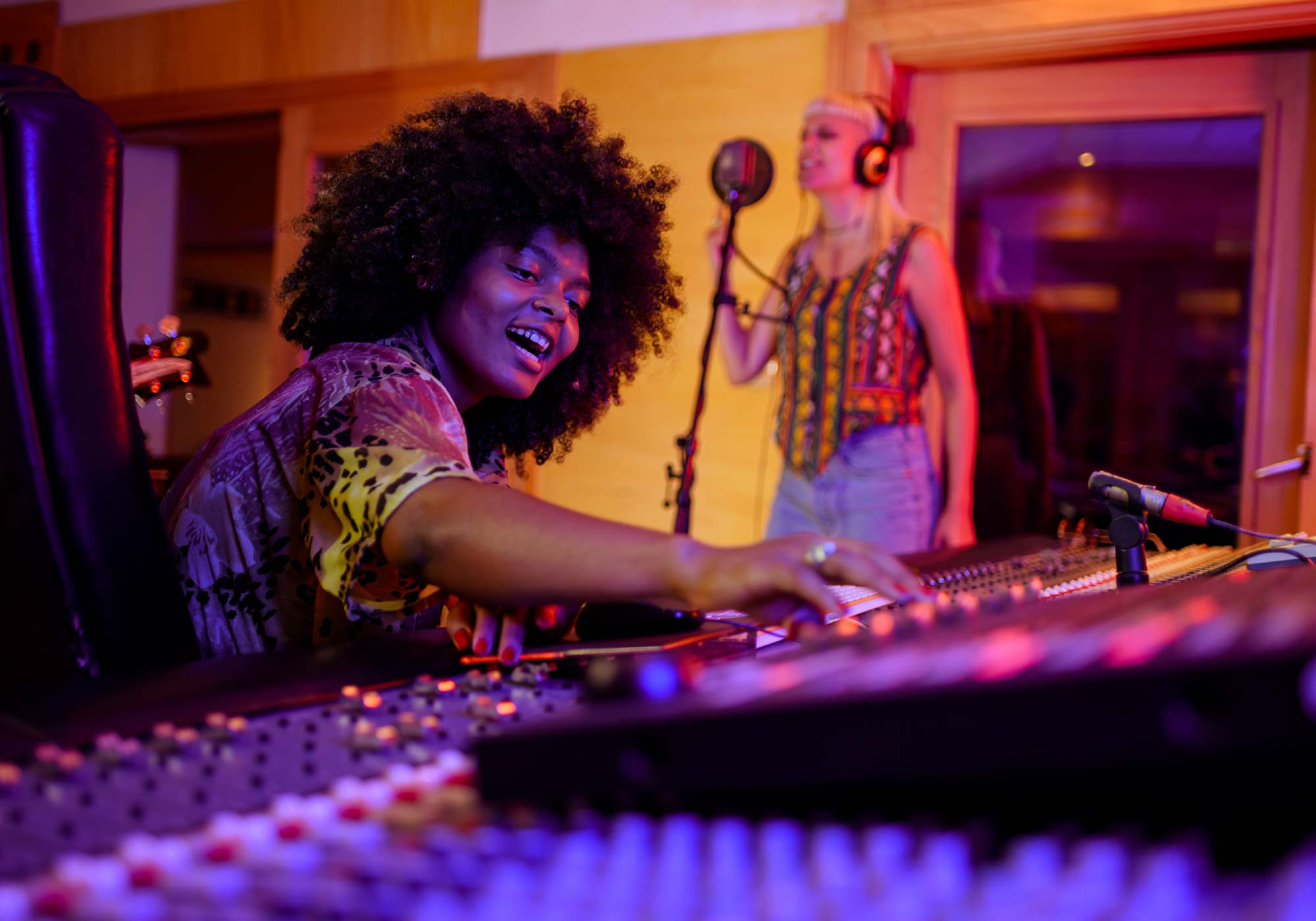
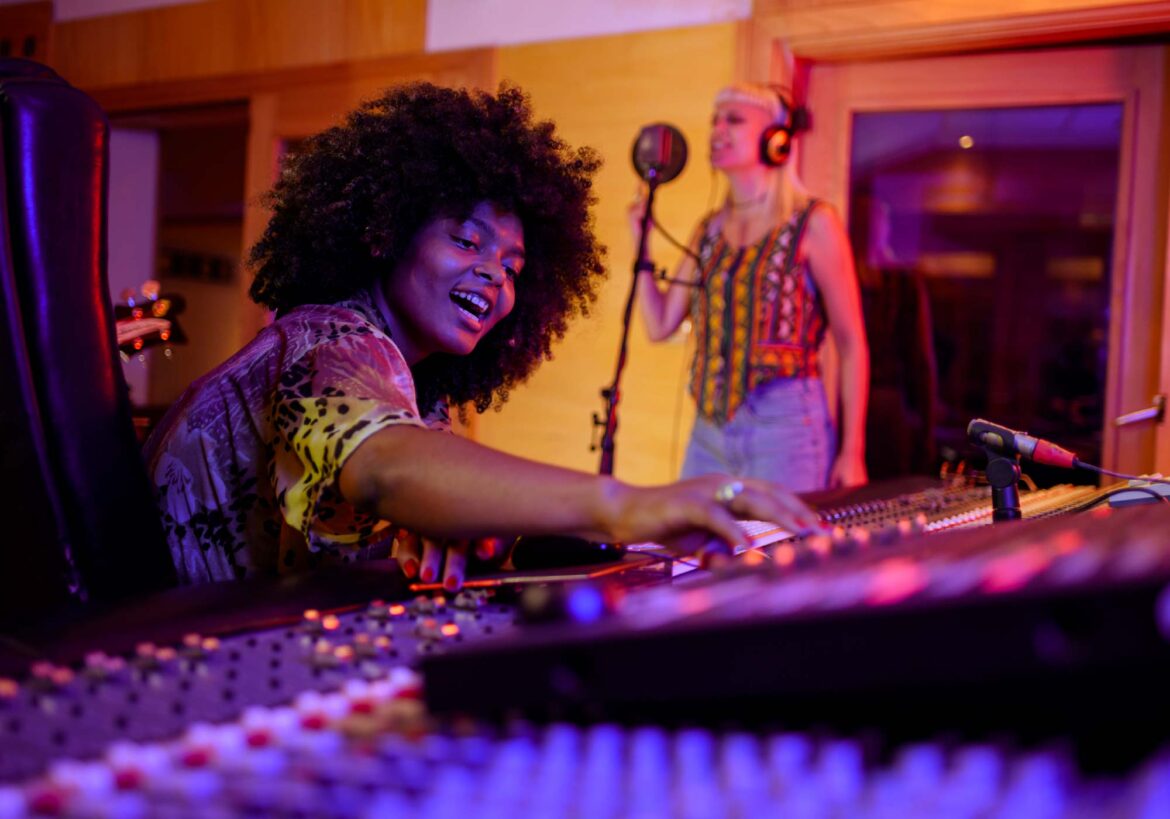
The music industry spent years arguing about whether AI belonged. Meanwhile, musicians started using it.
For the last few years, we’ve been having the wrong argument about AI music.
Is it real music?
Is somebody who uses AI a real artist?
Does pressing a button make you a producer?
Will AI replace musicians?
Everybody picked a side, everybody got angry, and somewhere in the middle of all that yelling, something important happened.
People started making music.
A lot of it.
Some of it is terrible.
Some of it is surprisingly good.
And some of it is good enough that unless somebody told you AI was involved, you’d probably never know.
So maybe it’s time for a better conversation.
First, Let’s Admit There’s a Problem
There’s a lot of garbage being generated.
No point pretending otherwise.
AI has made it possible to create a song in minutes. That means someone can create ten songs in an afternoon. Or fifty. Or five hundred.
And some people are doing exactly that.
Deezer recently reported that fully AI-generated music had crossed 50% of all new music being delivered to its platform at peak, reaching roughly 90,000 tracks a day.
Think about that for a second.
More than half of the new music arriving on a streaming platform was generated using AI.
That’s not a trickle.
That’s a fire hose.
But here’s the other interesting number: all that AI-generated music reportedly represents only a small percentage of what people actually listen to.
Apparently, giving the world the ability to create unlimited music didn’t suddenly give the world an unlimited appetite for listening to it.
Who knew?
The Problem Isn’t Just AI. It’s Volume.
There was already too much music being released before generative AI showed up.
Recording equipment got cheaper.
Distribution became accessible to almost everybody.
Bedroom producers could make professional-sounding records without ever stepping inside a commercial studio.
Then streaming removed the shelf-space problem completely.
There was no longer a record-store manager deciding which 500 albums could fit in the building.
Suddenly, everybody could release everything.
AI didn’t create that trend.
It hit the accelerator.
And that’s where legitimate musicians have every right to be concerned.
If streaming platforms become dumping grounds for millions upon millions of automatically generated tracks designed primarily to collect a few streams, that’s not helping music.
It’s noise.
Deezer says it has found an extremely high level of fraudulent streaming associated with fully AI-generated tracks. Spotify has also said it removed more than 75 million spammy tracks from its service during a 12-month period as generative AI exploded.
Those aren’t small numbers.
There is a problem.
But there’s another side to this conversation.
Using AI Doesn’t Tell Us How the Record Was Made
Here’s where the whole “AI music isn’t real music” argument starts falling apart.
Because what exactly do we mean by AI music?
Someone types:
“Make me a hit song.”
The computer generates something.
They upload the first result.
Okay.
Now consider somebody else.
They write lyrics.
Generate several musical ideas.
Change the arrangement.
Rewrite the chorus.
Generate another version.
Separate the stems.
Take those stems into Logic.
Replace the bass.
Record guitar.
Change the drums.
Record their own vocals.
Edit everything.
Mix it.
Master it.
Release it.
Both songs involved generative AI.
Are those really the same creative process?
Of course not.
That’s why simply putting everything into one bucket labeled AI MUSIC isn’t particularly useful.
We’ve Been Using Technology to Cheat for Decades
And yes, we said cheat.
Musicians know exactly what we’re talking about.
Quantization fixes timing.
Pitch correction fixes vocals.
Samples let producers use performances they didn’t play.
Drum machines replaced drummers on countless records.
Loops allow someone to drag eight bars of professionally played music onto a timeline and build a song around it.
DAWs let us move a chorus, duplicate a verse and correct mistakes without performing the entire song again.
Mastering software can now analyze a mix and make decisions that once required a specialized engineer.
Nobody walks into a club, hears a great record and screams:
“WAIT! WAS THAT SNARE QUANTIZED?”
We accepted those tools because eventually they stopped feeling new.
AI is different in scale, absolutely.
It can participate in the creative process at a level previous tools couldn’t.
That deserves scrutiny.
But “technology helped make this” isn’t enough information to decide whether the person using it had anything creative to do with the result.
There Are Lines That Matter
Being open to AI doesn’t mean pretending there shouldn’t be rules.
There should.
Cloning an artist’s voice without permission isn’t innovation.
Making a fake song and deliberately presenting it as a new record from an existing artist isn’t clever.
Using someone’s likeness to make people believe they endorsed something they never endorsed isn’t creativity.
And flooding streaming services with automatically generated tracks purely to manipulate royalty systems isn’t some brave new form of entrepreneurship.
It’s spam with a kick drum.
This is where the music industry is beginning to draw some lines.
Streaming and video platforms are developing AI labels, disclosure systems and stronger rules around impersonation. Spotify has tightened its policies around unauthorized vocal cloning and spam. YouTube requires disclosure for synthetically generated music in relevant circumstances and has expanded tools aimed at protecting people’s voices and likenesses.
That’s a good thing.
Artists should have control over their identities.
Listeners deserve transparency.
And legitimate creators shouldn’t have their work buried under mountains of content generated solely to game an algorithm.
But Don’t Confuse Protection With Fear
This is the part the music business has gotten wrong before.
New technology arrives.
People panic.
Then somebody figures out how to make something incredible with it.
Synthesizers weren’t real instruments.
Sampling wasn’t real music.
DJs weren’t real musicians.
Drum machines were going to destroy drummers.
Home recording was going to destroy studios.
Digital downloads were going to destroy albums.
Streaming was going to destroy…
Okay.
Streaming is a longer conversation.
But you get the point.
Technology changes how music gets made.
It always has.
The interesting question isn’t whether the tool belongs.
The interesting question is what creative people eventually do with it.
And That’s Where We Land
At On The Rise, we’re not interested in declaring war on a piece of software.
We’re interested in music.
If an artist walks into a room with a guitar and records something incredible, we want to hear it.
If a producer builds an entire track inside Ableton, we want to hear it.
If somebody chops a 40-year-old record into something completely new, we want to hear it.
And if a creator uses generative AI as part of the process and produces something undeniable?
We want to hear that too.
That doesn’t mean every AI-generated song deserves attention.
Neither does every traditionally recorded song.
Trust us.
We’ve heard bad music made the old-fashioned way.
Technology doesn’t automatically make something good.
It doesn’t automatically make something bad either.
The result still matters.
Maybe Curation Matters More Than Ever
Here’s the irony in all of this.
For years, technology has been making music easier to distribute.
Now AI is making music easier to create.
Eventually we may reach a point where the amount of music available is effectively infinite.
If that happens, creating another song won’t be particularly rare.
Finding one worth listening to will be.
That’s where DJs matter.
That’s where independent radio matters.
That’s where music writers, playlists, communities, tastemakers and actual human recommendations matter.
Not because they decide what qualifies as music.
Because somebody has to listen through all of it and say:
“This one. You need to hear this one.”
AI isn’t going to kill music.
Bad music isn’t going to kill music either. We’ve survived plenty of that already.
But AI may fundamentally change what becomes scarce.
It won’t be songs.
We’ll have more songs than anybody could possibly hear in a lifetime.
The scarce resource will be attention.
And in a world with unlimited music, the people willing to actually listen, discover, filter and champion something worthwhile may become more valuable than ever.
That’s the world On The Rise is interested in.
We don’t judge music by how it’s created.
Only by how it makes you feel.
HOT NOW
Chart
-

1
play_arrowMegaphone
-

2
play_arrowGrounded
-

3
play_arrowMoney
-

4
play_arrowSpitting Image
-

5
play_arrowRise Again
-